Nano Banana Pro: The AI Image Tool That's Actually Deck-Ready

1. Introduction: From Toy to Studio Tool
Nano Banana first landed as a viral toy: a 3-second 3D figurine machine that flooded social feeds with cute, chaotic characters. It was built for dopamine, not discipline—perfect for blind-box style surprises, avatar refreshes, and low-stakes fun.
Nano Banana Pro is a different story. Sitting on top of Gemini 3 Pro, it keeps the playful surface, but underneath it behaves like a focused imaging engine for teams that actually need to ship campaigns, decks, and products—not just memes.
2. Breakthrough #1: Text Rendering
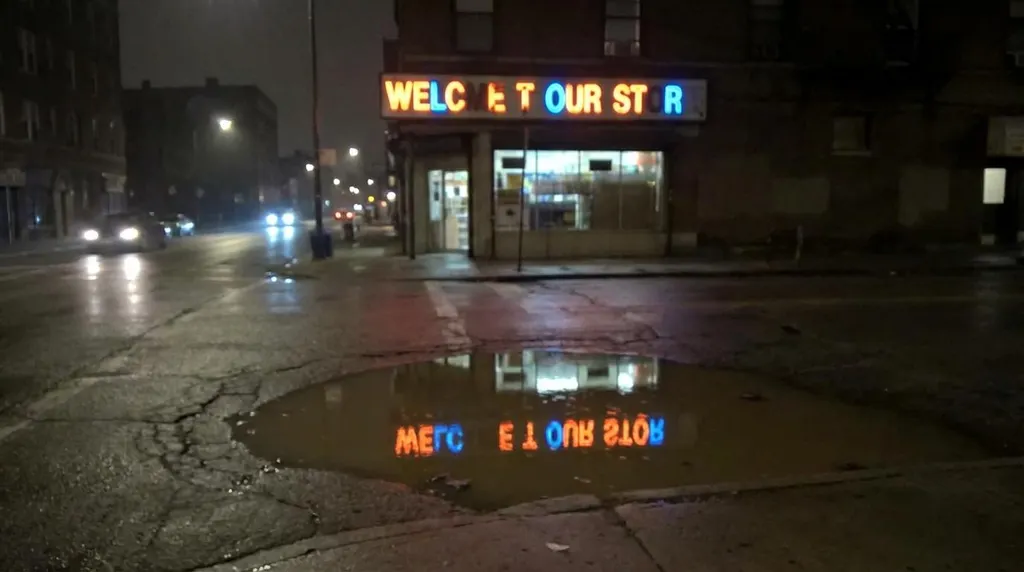 Original Nano Banana result (text rendering issues)
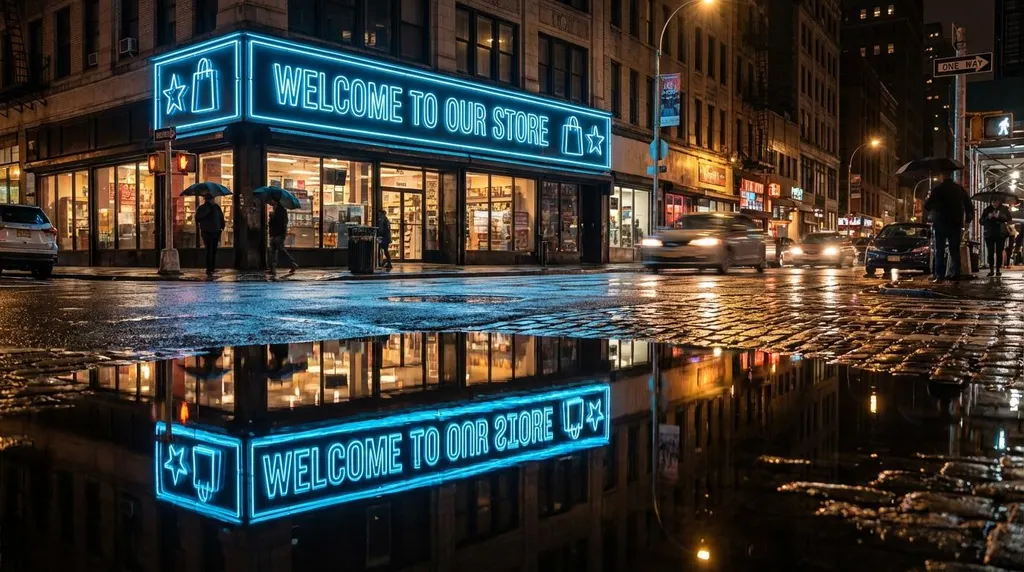 Nano Banana Pro result (high-quality text rendering)
The first big leap is text. The original Nano Banana can manage single words or short phrases, but longer sentences often melt into broken letters, inconsistent spacing, and random glitches. That’s fine for stickers or social posts, but unusable for anything with real layout requirements.
Nano Banana Pro pushes text into commercial-grade territory. It can render stable, sentence-level typography in multiple languages—Chinese, English, Japanese, Korean—while maintaining basic hierarchy and lighting logic. Neon signs feel intentional, posters look like they came out of Figma, and UI cards finally resemble product mocks instead of happy accidents.

Nano Banana result

Nano Banana Pro result
3. Breakthrough #2: Camera Behavior
The second leap is camera behavior. In the original model, prompts like “50mm close-up, shallow depth of field, warm sunset backlight” are treated more like vibes than instructions. You’ll often get something roughly correct, but DOF, focus, and highlight control are inconsistent.
With Nano Banana Pro, those prompts start to behave like real lens notes. Depth of field feels physical, not decorative. Wood grain, glass reflections, fabric texture, and background bokeh stack together in a way that reads like product photography. You pay for that control in time—8–12 seconds instead of 3—but you get images that are actually deck-ready and client-safe.
4. Breakthrough #3: Resolution & Stability
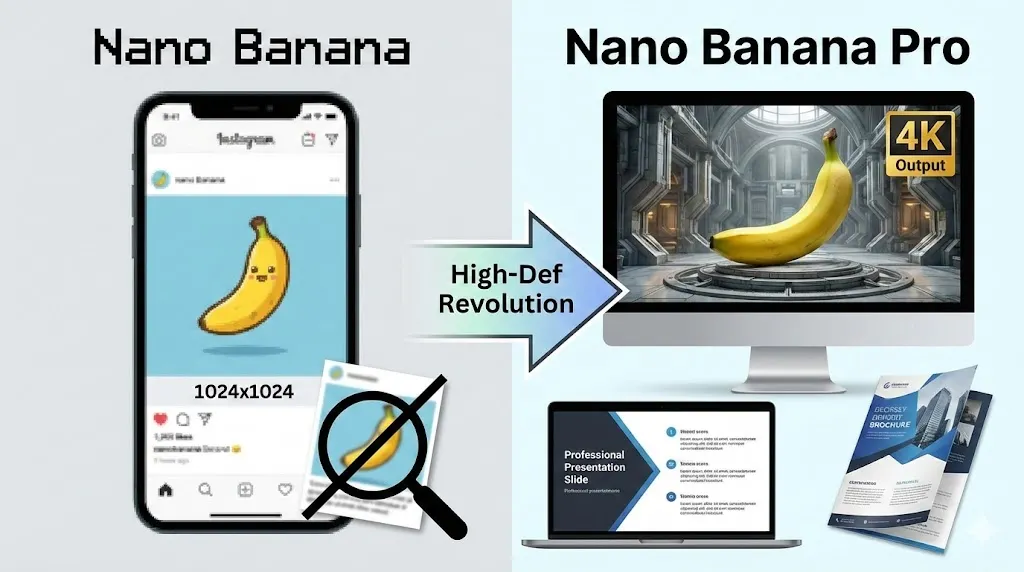
Resolution is the third pillar. The original tops out at 1024×1024, which is fine for social tiles and quick explorations, but easily falls apart in slides, print, or signage. Pro jumps to native 2K/4K. Edges stay crisp, micro-details survive zoom-ins, and logos or small text don’t immediately smear. It quietly changes where these images can live: not just in chats and feeds, but on storefronts, hero banners, and investor decks.
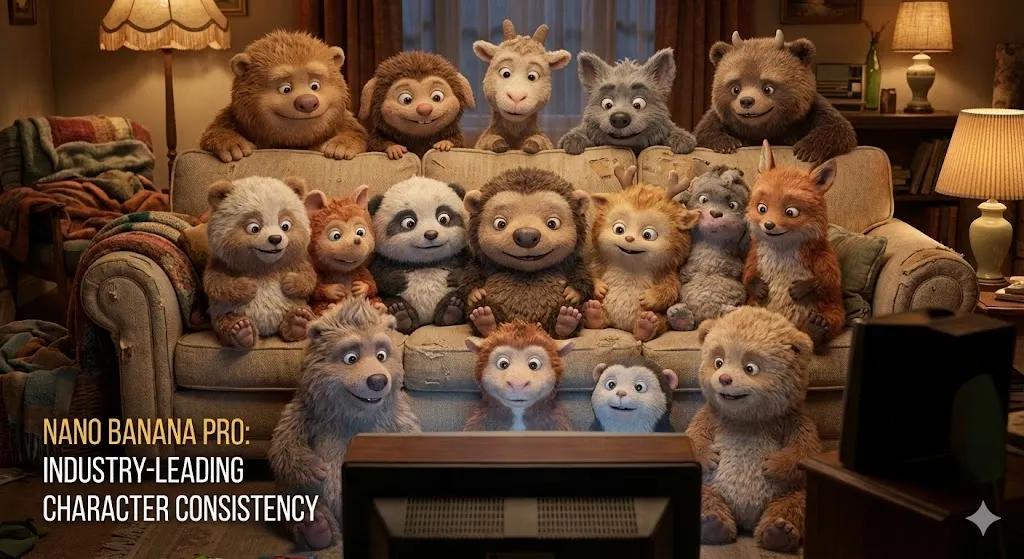
At the same time, Pro stabilizes multi-round edits and multi-image fusion. You can iterate five to seven times on the same scene without it drifting off a cliff, and you can fuse up to 14 images and multiple characters into one coherent world—lighting, scale, and identity all lined up.
5. New Workflows Unlocked
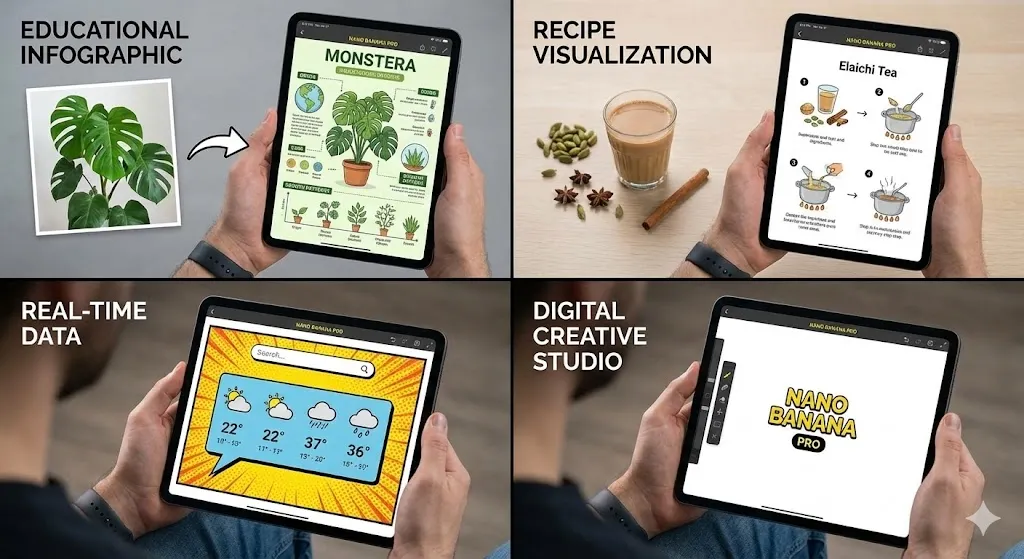
This unlocks new workflows. For architecture and interiors, Pro can read a rough floor plan—doors, windows, circulation—then turn it into a believable, style-controlled space in a single prompt. For information-heavy content, it can transform a single topic into clean infographics, recipe steps, or real-time cards for weather and news. For brands, it can take a loose description—“playful, friendly, pastel, mobile-first”—and spit out a rough visual system: mascots, icons, backgrounds, and scene styles coherent enough for real-world experiments.
At that point, Pro feels less like “one more image model” and more like a digital studio that understands direction. You don’t just ask for a picture; you ask for a shot list.
6. How to Choose: Original vs Pro
So how should builders choose between the two?
The original Nano Banana shines in pure consumer scenarios: fast, cheap, fun. It’s ideal for apps that want blind-box excitement, low-pressure avatar tweaks, or creative sandboxes where slight weirdness is part of the charm. If your metric is “images per minute” or “shares per session,” the original model is still a monster.
Nano Banana Pro fits the other side of the spectrum—where correctness is the product. E-commerce hero images, architecture previews, education visuals, packaging mocks, internal KVs, even pre-production moodboards for shoots all benefit from Pro’s text reliability, camera control, and 2K/4K output. The throughput is lower, but the value per image is dramatically higher.
7. The Ladder: From Toy to Production Pipeline
Together, the two models form a ladder:
- Toy → Tool
- Exploration → Production
- Blind-box surprise → Reliable pipeline
In a world where “model launch = product launch,” access to a strong model is no longer a real moat. The edge now belongs to teams that can take the same API and turn it into stable, polished, shippable experiences—fast. Nano Banana lit the spark; Nano Banana Pro is what happens when that spark is wired into an actual creative workflow.